
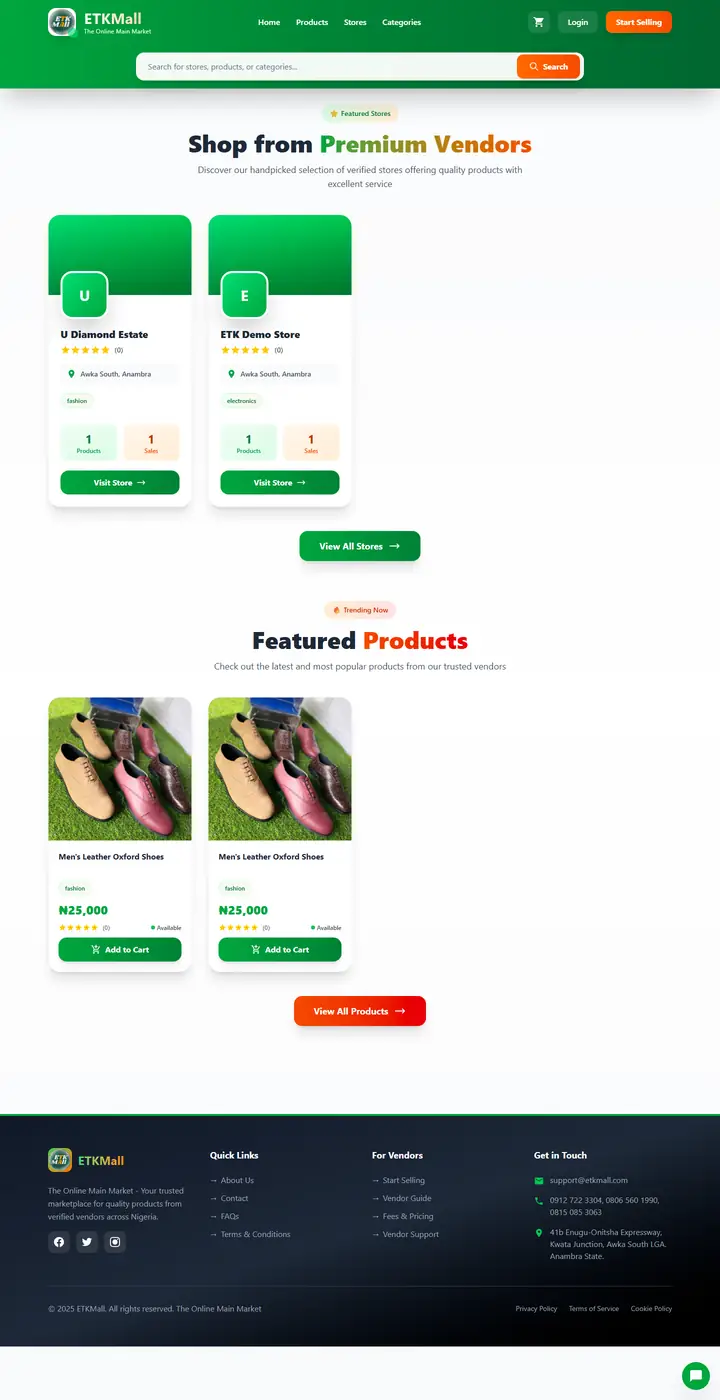

Vendor portal
Vendors sign up, submit business details, add products, manage stock and follow their orders and payouts.
Case study · E-commerce
A marketplace where approved vendors list their products and sell through one checkout, with each payment split between the platform and the sellers.
The problem
Commerce in Nigeria is fragmented. A fashion seller in Onitsha, an electronics trader in Alaba and a cosmetics shop in Abuja all sell to the same buyers, but each has to build a storefront, set up payments and find customers on their own. Most never get past WhatsApp catalogues and Instagram messages.
ETK Mall’s idea was one trusted marketplace: any vendor can register, list products and start selling through a shared checkout, with payments handled by a Nigerian gateway.
What we built
Vendors sign up, submit business details, add products, manage stock and follow their orders and payouts.
A vendor’s products go live only after an admin approves the account, which keeps poor and fraudulent listings out.
Products from every approved vendor in one catalogue, with categories, variants, search and filters.
A buyer can pay once for items from several vendors, through Paystack.
The platform takes its commission and settles the rest to each vendor, including when there’s a refund.
Buyers, vendors and admins each get their own dashboard, actions and access to data.
The hard parts
A single shop has one owner, one stock list and one bank account. A marketplace has many of each, and the platform has to keep them apart.
Your marketplace
Start with how vendors get approved and how they get paid. Those two decisions shape most of the build, and most of the cost.
Start a project
Send a short WhatsApp message with your idea. We’ll ask a few questions, then send a written scope and a quote in Naira.
Free consultationTell us what you want to build. We’ll reply with honest advice and a quote in Naira, at no cost.
Free consultationChat with us on WhatsApp